LOOK AT A ROOM.
HEAR ITS STORY.
A hands-free audio tour that lives on Ray-Ban Meta smart glasses. The visitor wears them, walks, and looks at a door, the narration arrives in their ears. No screen. No guide. Phone stays in the pocket. Built solo, shipped in two weeks, for an engineering institution in Delhi NCR.
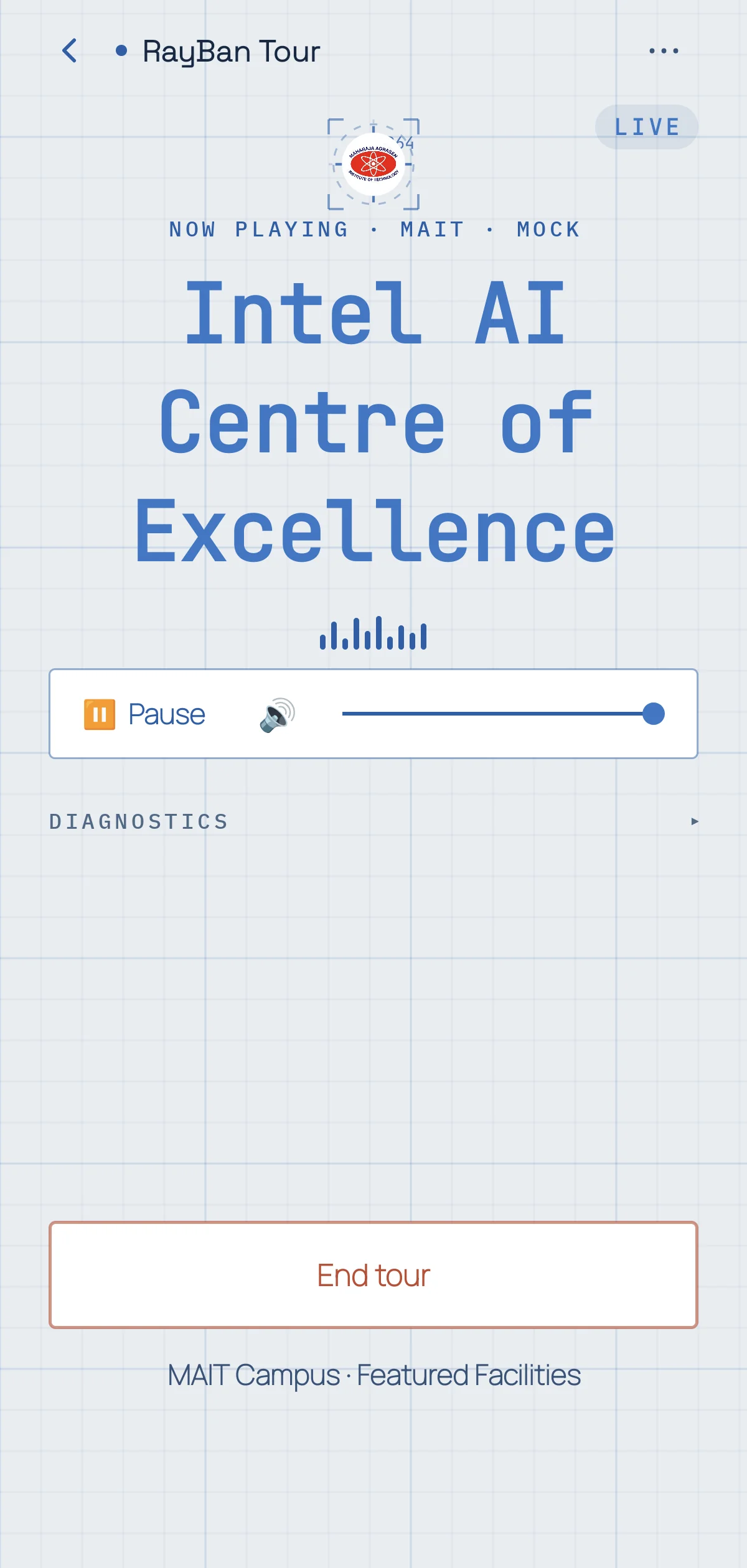
THE BRIEF
§01 // Mission parametersThe client wanted campus tours with nothing to hold and nothing to tap. Wear the glasses, walk, look at doors. That's the whole interface.
The glasses have a camera and speakers. No display. The whole interface is audio.
The SDK is a developer beta. Native only, no Unity. Unproven in India.
The people running tours are not developers.
Running cost had to sit as close to zero as possible.
Hardware by Meta. Everything it does here, by us.
HOW A TOUR RUNS
§02 // ProcedureVisitor faces the room's poster from arm's length. No aiming, no tapping, nothing open in hand.
The glasses' camera reads the QR. A debouncer makes sure one glance means one room, not five.
That room's narration plays straight into their ears. The phone runs everything from a pocket and never comes out.
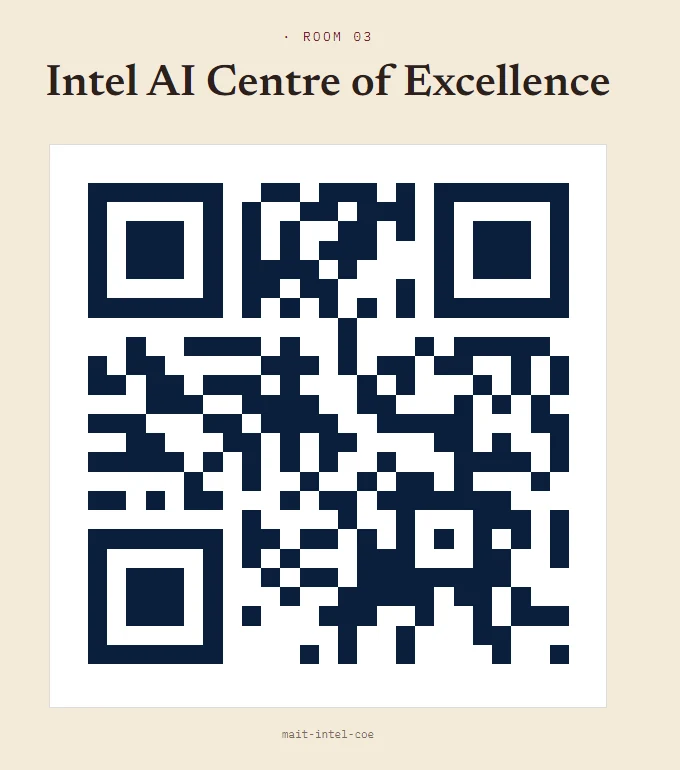
Posters print per college. Deploying a new building is a stack of A4s.
THE EVIDENCE
§03 // ExhibitsCaptured on device, on campus, on the real glasses. No mockups.
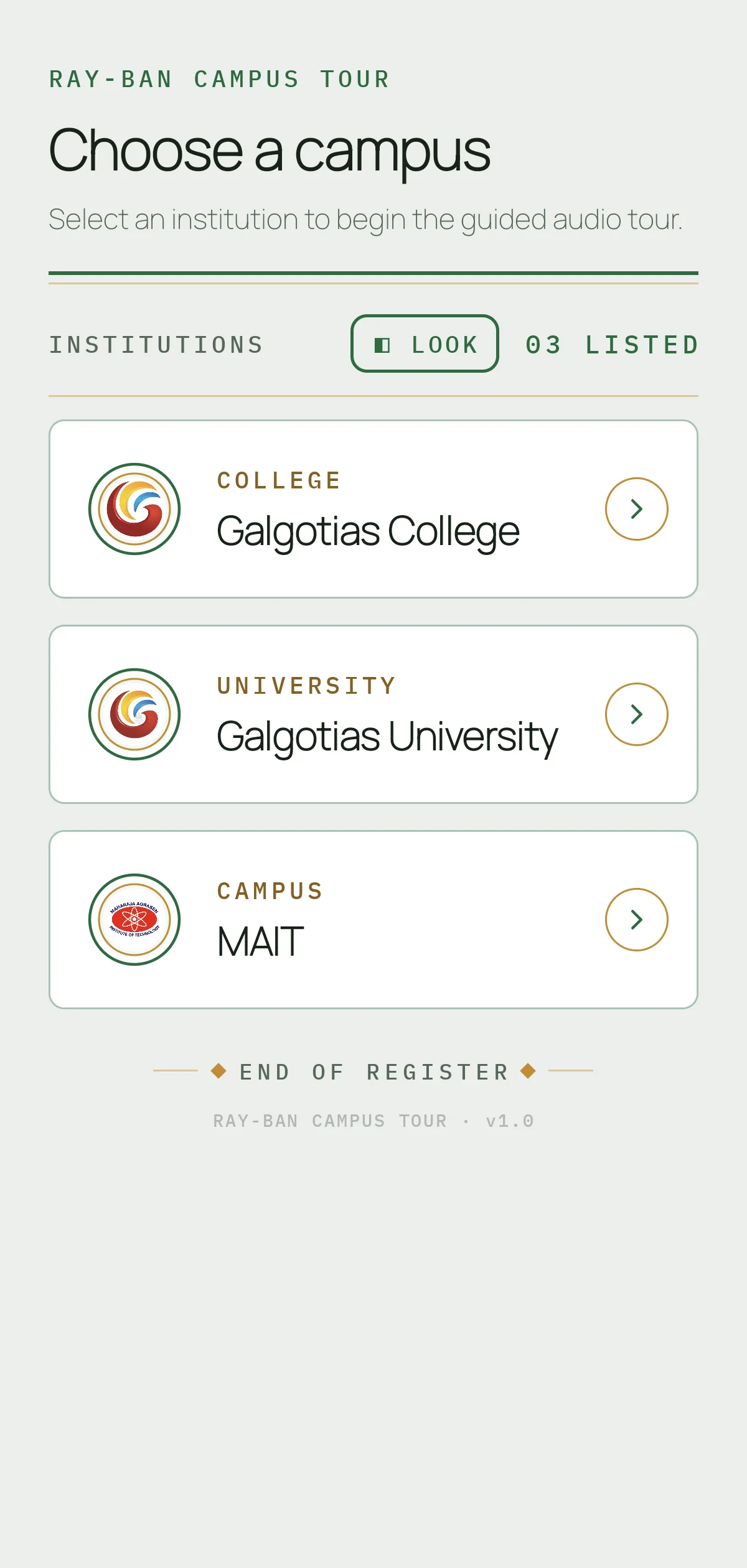
One backend, every campus. Loads once, then works offline.
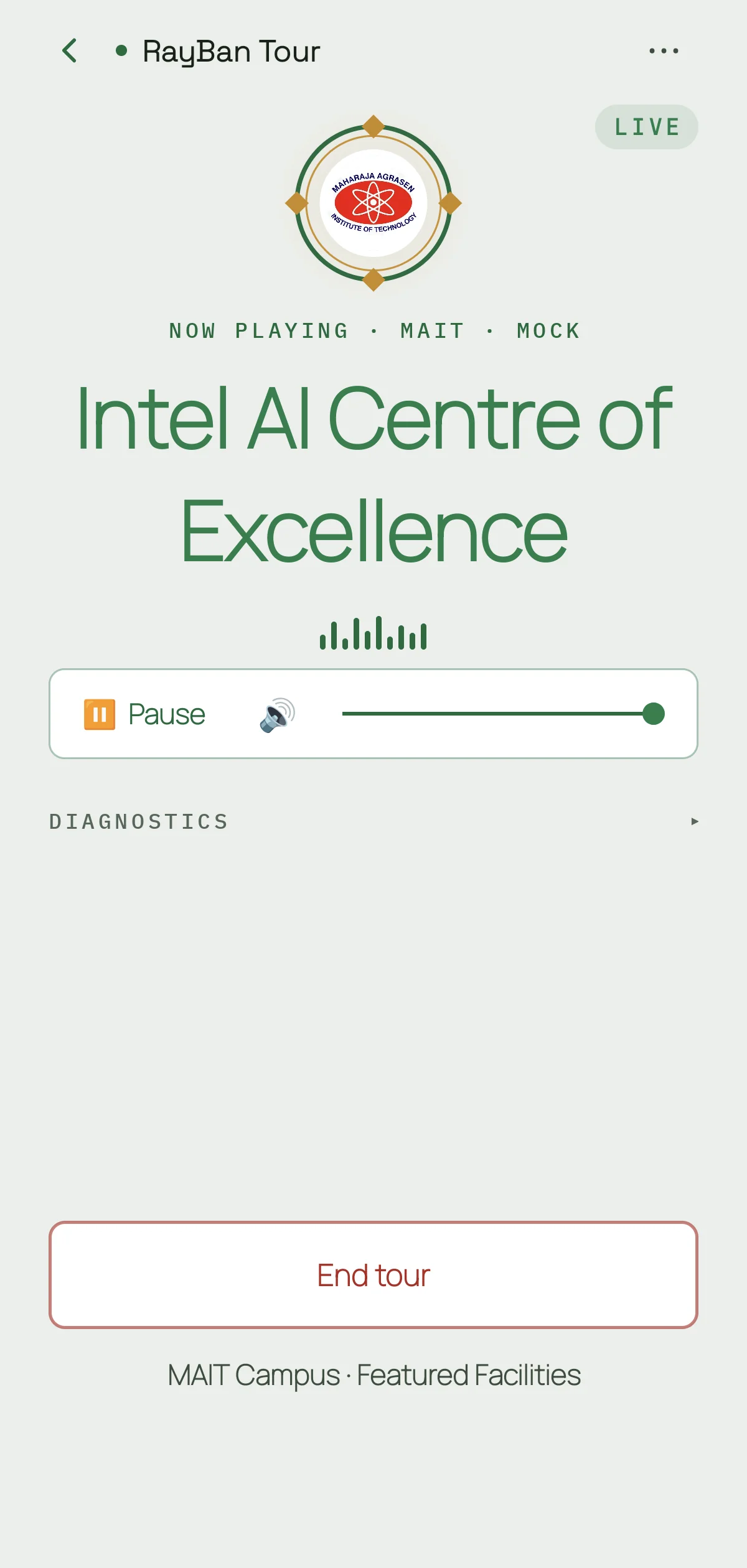
Four full identities switch at runtime. The client picked Blueprint and Institute.
Every identity got a WCAG contrast pass. The people running tours aren't all twenty-two, and squinting is not an accessibility strategy.
INCIDENT Nº 1
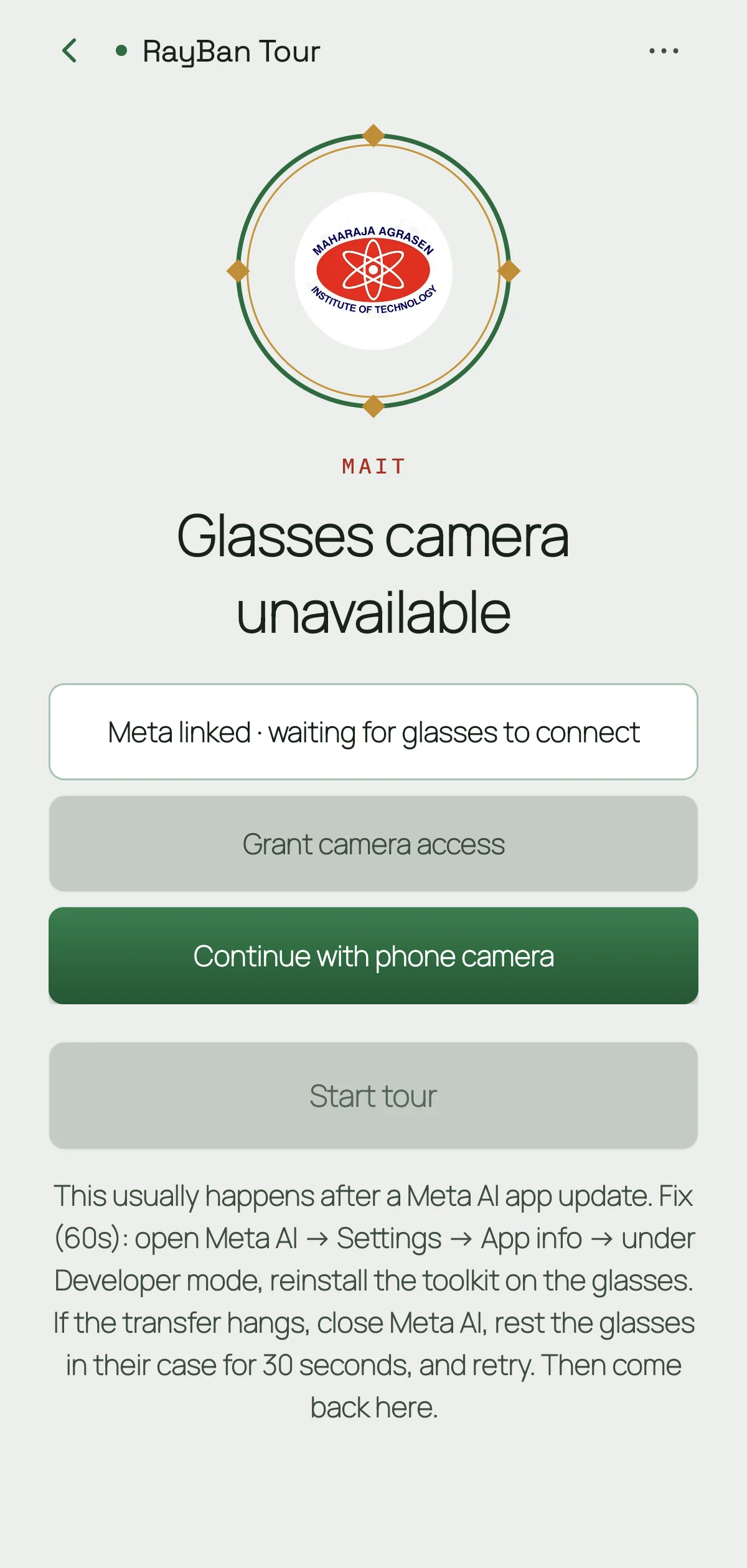
§04 // Field failureMid-deployment, the glasses went quiet. Diagnosis: Meta AI updates itself and quietly leaves the on-glasses toolkit stale, a failure nobody documents, because almost nobody ships on this thing yet.
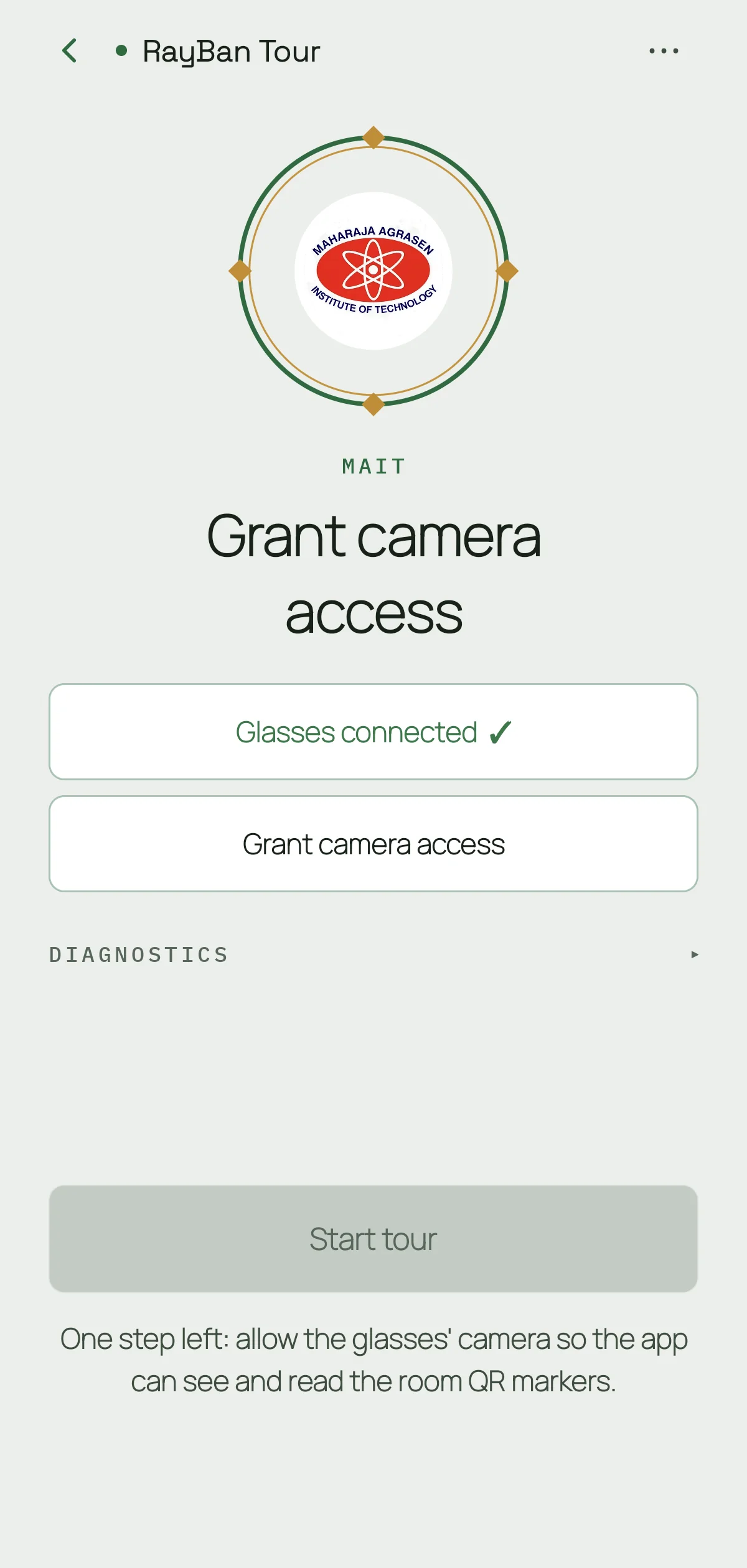
So the app watches for it. When the link degrades, a guard screen catches the operator and walks them through a sixty-second fix. No call to us, no engineer on site. That's the difference between a demo and a deliverable.
THE SIGNAL PATH
§05 // Technical annex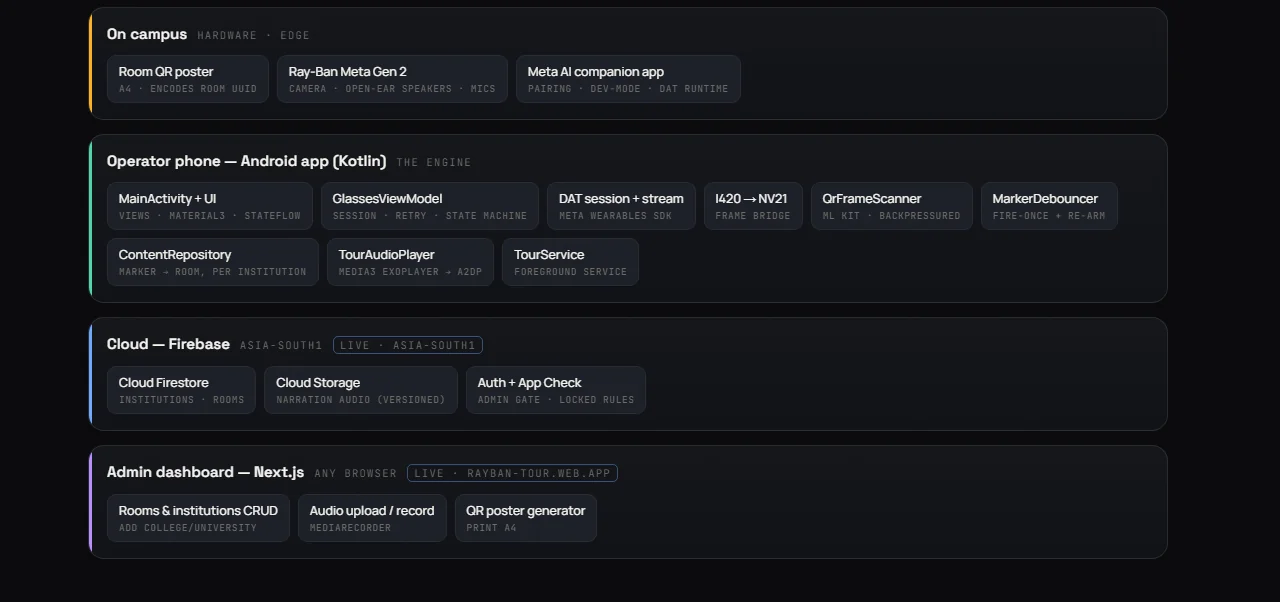
The signal path, door to eardrum. No display exists on this hardware. Audio is the entire interface.
Wearables Device Access Toolkit · developer beta, native only. We pathfound India access end-to-end.
Foreground service · the phone drives the whole tour from a pocket.
Live backend · Firestore plus a Next.js dashboard. Edit a script at a desk; it's on every tour phone in seconds.
Free-tier tricks · college crests ship as base64 inside the docs. No storage plan, no storage bill.
Voice from text · narrations can be plain scripts: on-device TTS synthesizes to file, ExoPlayer plays it with live volume and mute.
Offline cache · first load sticks. Dead campus Wi-Fi is not an incident.
ONE BUILD, ANY CAMPUS
§06 // RedeploymentThe whole thing is white-label. Your crest sits at the centre of the pulsing emitter, your rooms live in the dashboard, your posters print from a template.
Handover was an operator manual and a dev guide. PDFs, not a phone number.
Add a college in the dashboard, no app update
Print that college's posters
Pair as many phone-and-glasses kits as the crowd needs
Edition: 1 of anything
THE REPORT ENDS.
THE OFFER STANDS.
This was a beta SDK, hardware with no screen, a two-week window, and a demo that had to work in front of people. It shipped. Yours can too.
Start your field report → kindamad.hav@gmail.com Back to all work →